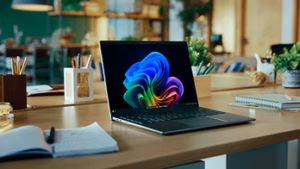
For most of the UK workforce,the laptop has become the workhorse of daily life. Portable, versatile, and increasingly powerful,it is easy to see why businesses lean on them to equip a hybrid and mobile workforce. Yet beneath their convenience lies a hidden cost:the impact of laptop screens on employee wellbeing and productivity.

Designed for mobility, the relatively small display of a laptop means less space for multitasking which leads to more time spent switching between windows. Because the screen and keyboard are joined together it can be difficult for users to position them in a way that is both comfortable and ergonomically correct which can lead to workers sitting in awkward positions with bad posture. The compact displays can lead to visual discomfort due to the glare and brightness issue.
Whilst these compromises may be acceptable for a short time, the reality is that many laptop users spend entire working days, and approximately 1700 hours a year – in front of their screens, compounding the strain on both their eyes and bodies. Research suggests that nearly half of UK employees believe their job puts their eye health at risk, and almost two-thirds of UK office workers experience symptoms of eye strain such as dryness, blurred vision and headaches – all linked to screen exposure. If the time spent at laptops is added to time spent looking at other devices including smartphones and tablets it could equate to more than twelve hours a day spent looking at digital screens.
The consequences of this go further than just eye health – poorly configured screen setups are contributing to musculoskeletal problems, repetitive strain injuries and poor posture. These issues can directly impact sickness absence and lack of productivity, which, together with presenteeism, form part of the wider cost of poor workplace health (estimated at over £100 billion a year).
However, there is a clear commercial case for addressing this problem. Providing employees with high-quality external monitors can transform the way they work. Larger scenes that are set at the correct height and distance can reduce eye fatigue and encourage better posture. Workers with a more comfortable and efficient setup can have longer concentration periods, fewer errors and less stress; all of which can have a direct impact on output and employee morale.
Sustainability can also be linked to increasing employee productivity and health, Whilst organisations may be hesitant to invest in external monitors, the reality is that durable, energy efficient monitors such as the EIZO FlexScan EV2460 are built to last, and often include features such as anti-reflective coating, flicker free displays and automatic brightness adjustments to help prevent eye fatigue. Over time, products within the FlexScan range can reduce energy bills, cut down on the environmental impact of a business through a reduction in CO2 emissions and can lead to increased employee morale. In a climate where organisations are under increasing pressure to meet sustainability targets, procurement choices that balance commercial efficiency with environmental responsibility are key to investing in the future.
Whilst laptop screens were never designed to be a full-time workstation solution, for a number of employees and businesses they have become exactly that. With a growing recognition of the hidden toll on wellbeing, productivity and sustainability, businesses need to start looking beyond the short term costs and towards the total cost of ownership of workplace technology. These decisions can help to protect employees, strengthen budgets and support long-term sustainability goals.
To Learn more please visit: https://eizovisualsolutions.com/