The modern workforce demands spaces that are multi-purpose, reconfigurable, and ready for hybrid collaboration, says Sanjay Kulkarni, Vice President of Product Management for Q-SYS, as better and more co-operative ways of working are constantly emerging.
Today’s workplaces are expected to deliver spaces that facilitate task-based teamwork, hybrid workshops, flexible collaboration spaces, and more. Each new style of work requires a different configuration of technologies to support it.
 Outfitting even one space with the necessary equipment is a big investment, and when every upgrade means redesigning, reinstalling, and re‑standardising, updates aren’t just costly, they’re disruptive. This creates a strain that intensifies over time.
Multiply this across an enterprise, and the impact quickly compounds. Whether it’s one building or a global footprint, keeping spaces aligned comes at a heavy lift. For most organisations, keeping up with the pace of innovation is simply unrealistic.
Scalability and flexibility
The main obstacle standing in the path towards future-flexible workplaces are rigid legacy systems that are:
- Resistant to change due to their highly fragmented nature
- Limited in their ability to scale and standardise upon
With systems like these, opportunities for growth are hindered, experiences are diminished, and friction across the workplace increases. Upgrades often require ripping out existing systems entirely and starting from scratch again and again, or patchworking together incompatible technologies. This creates a cycle of disruption and diminishing returns.
Organisations are ultimately left with a lose-lose scenario: either invest heavily in constant rebuilds to stay relevant, or cling to outdated systems that frustrate employees, degrade the experience, and limit innovation.
To overcome these limitations, organisations need future-ready environments that can scale, adapt, and integrate new technologies without disruption or spiralling costs. They need an alternative that unites systems, reduces complexity, and protects long-term investments.
The path forward
High-performance workplaces, driven by a full stack AV platform, can evolve at the speed of software — where upgrades are delivered instantly through the cloud. The platform approach unifies technology, reduces complexity, and protects investments. Their flexibility ensures workplaces can scale and adapt as business needs change.
Static systems are no longer compatible with dynamic organisational goals. As expectations rise and work environments continually evolve, flexibility without excessive cost becomes a foundational requirement rather than a differentiator. High-performance workplaces make that possible, ensuring organisations can grow, adapt, and support their people without being slowed down by outdated technology.
The Experience Layer
For years, “great AV” meant seamless collaboration in meeting rooms and spaces. But collaboration in a high-performance workplace doesn’t operate in individual spaces — it operates across journeys, from the first moment someone enters a place, to how they collaborate in any space, make decisions, and leave with clarity on what happens next.
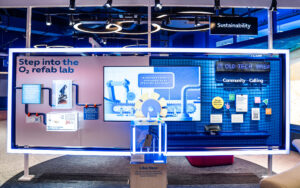
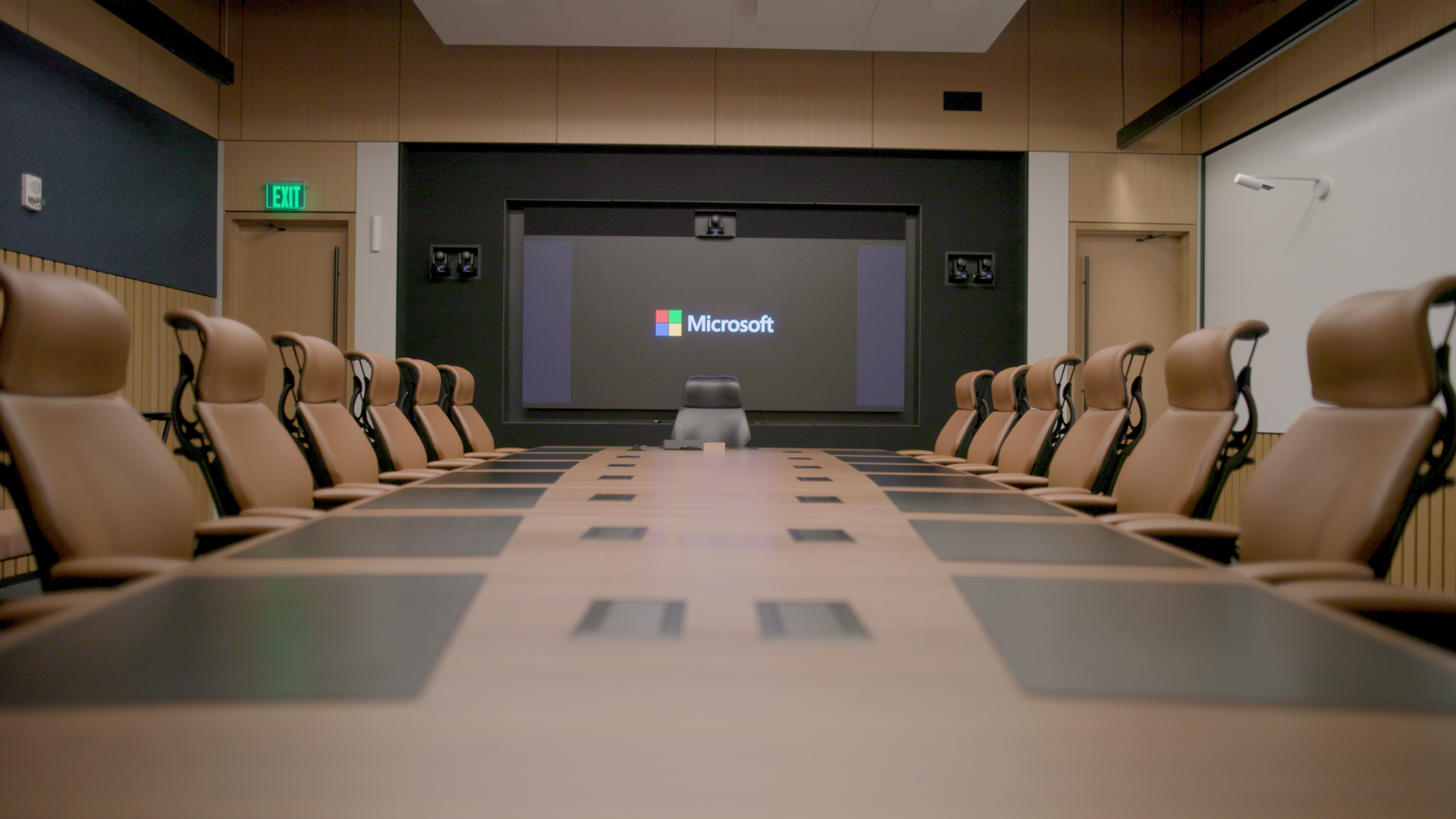
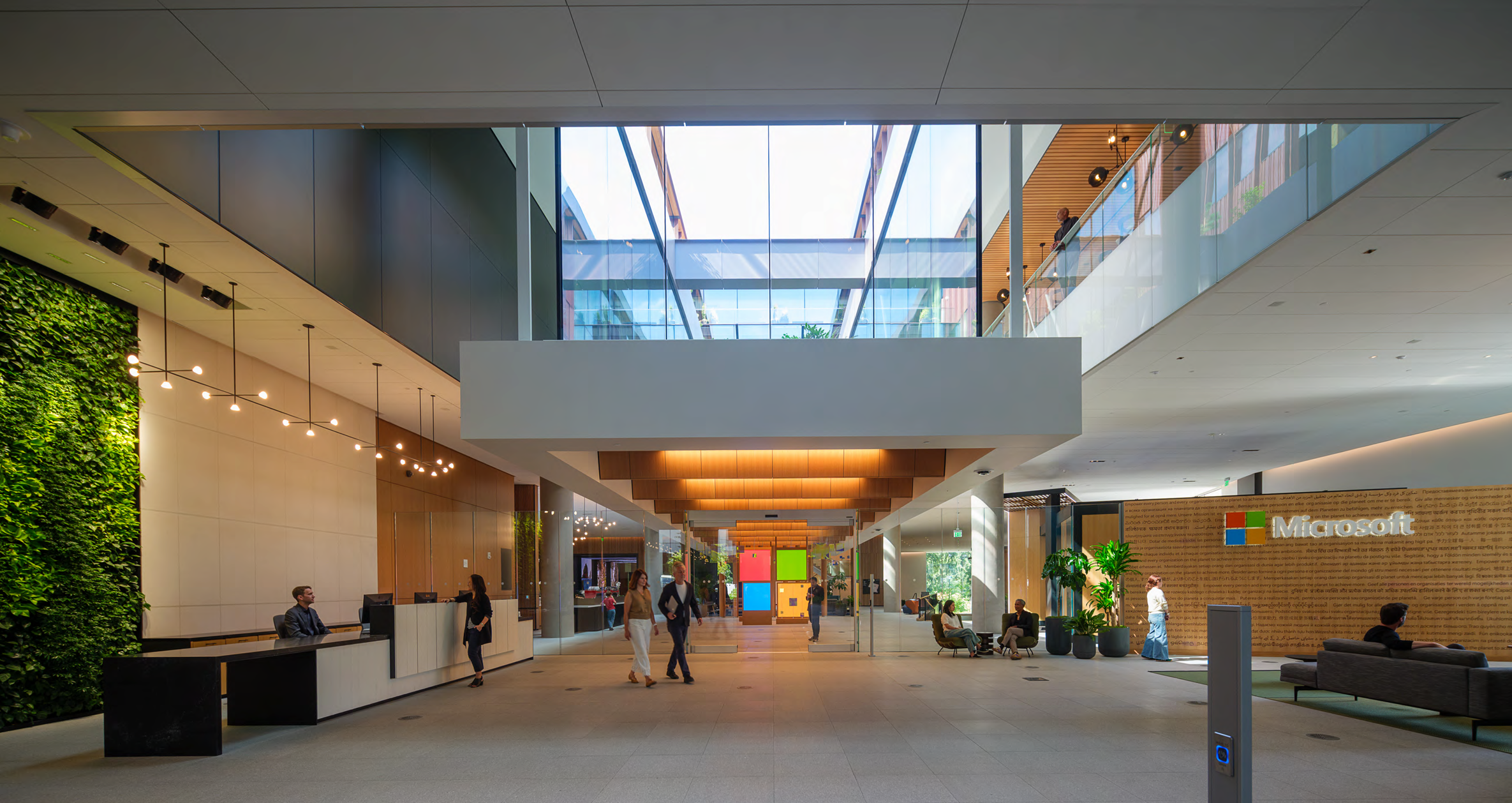
That’s what makes Microsoft Experience Center One (EC1) in Redmond such a compelling signal of where the industry is headed. Built to showcase AI, data, cloud, security, and next generation collaboration in real business scenarios, EC1 is a living environment designed to evolve as fast as innovation does.
To deliver that kind of adaptability at enterprise scale, Microsoft leaned into a simple premise: when experience is the product, the infrastructure must be software-based. In EC1, Microsoft chose the Q-SYS Full Stack AV Platform to unify audio, video, control, monitoring, and room automation into a centralised, network-first architecture across over 1,200 endpoints, reducing complexity and enabling consistency across theatres, demo labs, immersive installations, and executive meeting spaces.
And because collaboration is now inseparable from intelligence, EC1 also illustrates how workplaces are becoming AI-ready. Microsoft standardised on Teams Rooms across collaboration spaces, with monitoring via the Microsoft Teams Rooms Pro Management portal alongside Q-SYS Reflect (Q-SYS’ native cloud layer for the platform), creating a foundation built for scalability, uptime, and evolution.
The operational implications are just as important as the experiential ones. AVI-SPL was the main integration partner on the project, and together with Q-SYS Professional Services and Sales Engineering Teams along with several consultants, Microsoft’s experiential vision became reality even under a compressed commissioning window.
For more information about the Q-SYS visit: www.qsys.com
Q-SYS™, the Q-SYS logo, are trademarks and/or registered trademarks of Acuity Inc. in the United States and other countries.
Visit us at www.acuityinc.com.