Satellite-to-mobile connectivity is opening up new ground for remote teams
For years, businesses have accepted that some places simply sit beyond mobile coverage. Satellite-to-mobile connectivity is opening up parts of the map that businesses have traditionally worked around rather than through. Here, Kristian Torode, Director and Co-Founder of business communications provider Crystaline, outlines what direct-to-device satellite means for remote businesses and why it complements conventional connectivity rather than replacing it.
Field engineers, agricultural contractors and tradespeople increasingly work across large territories, remote sites and rural locations where staying connected has historically been a challenge. O2’s launch of a business-grade satellite service signals a shift in expectations, bringing always-on communications to areas that have traditionally fallen outside mobile network coverage.
A satellite in every pocket

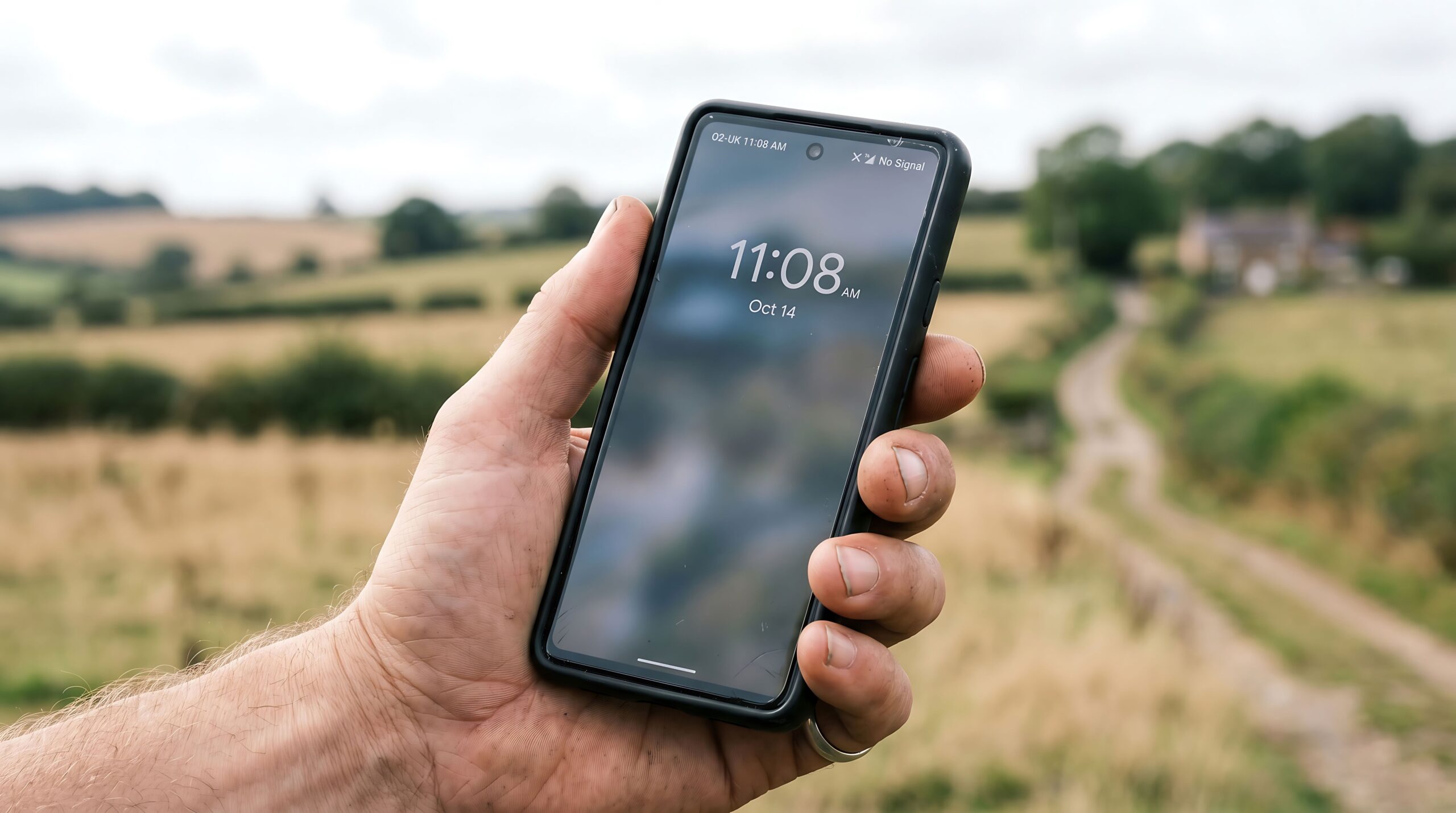
These advances in direct-to-device satellite connectivity are creating an opportunity for businesses operating beyond the reach of traditional mobile networks. The technology uses low-Earth-orbit (LEO) satellites to connect directly with compatible handsets, allowing users to maintain communication in areas where terrestrial coverage is unavailable. Rather than replacing mobile networks, satellite connectivity provides an additional layer of access for teams working in remote or difficult-to-reach locations.
For years, businesses have been forced to choose the network that offers the fewest compromises. Direct-to-device satellite introduces another option entirely. Ofcom data shows that 96 per cent of the UK has predicted 4G coverage from at least one mobile network operator, but only 84 per cent has predicted good 4G geographic coverage from all four operators. This gap highlights the continued presence of partial not-spots, where connectivity exists in theory but may not be consistently available across networks.
Unlike traditional satellite communications, which often require specialist equipment, direct-to-device services are designed to work through compatible smartphones without requiring a separate satellite terminal. When a device moves beyond normal mobile coverage, it can connect via satellite before returning automatically to terrestrial networks when a conventional signal becomes available.
Tested by firefighters before it reached the shelf
The potential of this technology has already been demonstrated in demanding operational environments. In July 2026, a major wildfire broke out near Tintwistle in Derbyshire, in terrain with no traditional mobile coverage whatsoever. A mobile operator supplied 100 satellite-enabled phones to Derbyshire Fire & Rescue Service, and crews used them at the scene over several days to stay in contact, share updates and access information as the incident developed. Nathan Stevens, area manager at Derbyshire Fire & Rescue Service, later said the deployment showed how “satellite-enabled phones can provide vital connectivity”, giving crews an extra communications option in a location where none had previously existed.
This deployment demonstrates something many businesses have previously considered impossible: maintaining communications in areas with no conventional mobile coverage. It showed the technology working under real operational pressure and is a useful reminder of where its value actually lies. Not in replacing the network beneath it, but in challenging the idea that coverage gaps are simply something businesses have to accept. Messaging, live location-sharing and route information are now possible in not-spot areas. This is a new option for teams whose work has always taken them beyond the reach of a mast, providing another string of communications while still relying on the same network they always have.
So is this the end of the not-spot?
For businesses with people working away from fixed premises, that distinction is the one worth acting on. A field engineer on a remote wind farm, a farm manager checking stock across acres with no signal or a site surveyor on a new stretch of coastline now has a way to send a message or share a live location the moment something needs flagging.
This means fewer missed updates, faster responses when something goes wrong and greater confidence when operating in locations that have traditionally fallen outside the reach of mobile networks. For businesses whose work already pushes them into the parts of the map a mobile mast has never reached, this confidence is the real benefit.
Crystaline believes businesses should focus on where they need to work, not which connectivity limitations they need to work around, reviewing where connectivity falls short and building a mobile setup, across networks, plans and now satellite services, that match how teams actually work. As an independent provider with no ties to a single network, Crystaline isn’t restricted to recommending one operator’s solution. The focus stays on removing connectivity barriers, wherever work takes a business.
Contact Crystaline to find our more